
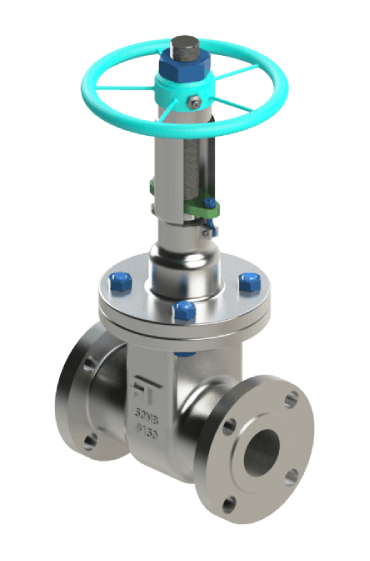
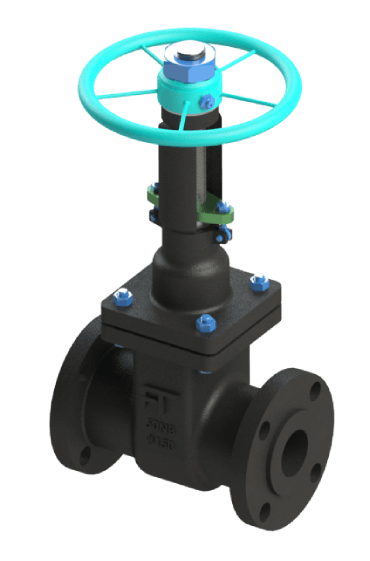
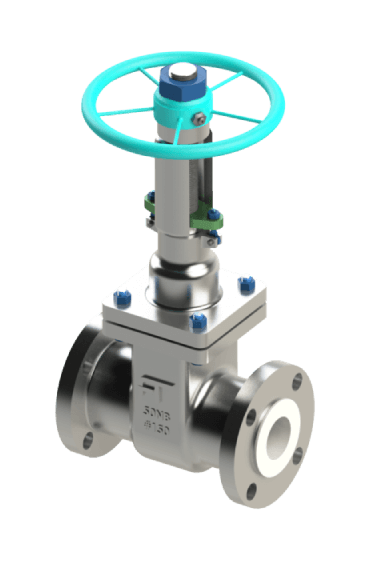
A Gate Valve is a type of valve used to control the flow of fluid by either fully opening or fully closing the passageway with a sliding gate.
Gate Valve Manufacturers in Mumbai, India
Trusted Gate Valve Manufacturers in India
We are leading Gate valve manufacturers in Mumbai. The straight-through unobstructed path of a gate valve causes low-pressure loss across the valve. Unlike butterfly valves, the unobstructed bore of a gate valve allows for pigs passage during cleaning pipe procedures. These valves come in a variety of sizes, materials, temperature and pressure ratings, and gate and bonnet designs. As experienced gate valve manufacturers in India, we focus on quality, durability, and performance to meet evolving industry demands.
What is a Gate Valve?
A gate valve is a linear motion valve used to start or stop the flow of fluid in a pipeline. It operates by lifting or lowering a flat or wedge-shaped gate (disc) inside the valve body. When the gate is fully raised, it allows the fluid to flow freely with minimal pressure drop. When the gate is lowered, it completely blocks the flow.
Gate valves are primarily designed for on/off service rather than flow regulation, as partially opening the valve can cause vibration and damage to the gate and seat. These valves are widely used in oil & gas, water treatment, power plants, and industrial piping systems due to their reliable sealing and ability to handle high pressure and temperature conditions.
At Freture Techno Pvt. Ltd., we deliver Gate valves that embody precision engineering and robust performance, tailored to meet the most demanding industrial requirements. These valves are meticulously crafted to offer reliable flow control across a wide range of applications, ensuring efficiency and durability. Types of Gate Valve we provide API 600 Gate Valve, Forged Gate Valve and PTFE Lined Gate Valve
API Standard Compliance
Our valves comply with industry-recognized standards such as API 600 and API 602. This ensures that our products meet strict quality, safety, and performance benchmarks. By adhering to these standards, we provide gate valves capable of operating efficiently under demanding conditions, reinforcing our position among trusted Gate valve manufacturers in India.
Materials of Construction (MOC)
We offer Gate valves in a variety of materials to address diverse operational needs: Carbon Steel: Chosen for its strength and durability, making it suitable for general service applications. Stainless Steel: Provides excellent resistance to corrosion, ideal for challenging environments. Alloy Steel: Designed to withstand high temperatures, making it suitable for demanding applications. Special Alloys: Engineered for specific applications requiring unique material properties. Each material is selected to enhance the valve’s performance and longevity, ensuring it meets the specific requirements of your application.
Application Details
Gate valves are pivotal in industries requiring precise flow control with full shut-off capability. They are commonly used in: Oil and Gas: For managing the flow of hydrocarbons in pipelines and refineries. Water Treatment: In water distribution and wastewater management systems. Power Generation: Within steam and cooling water systems in power plants. Chemical Processing: For handling corrosive and high-temperature fluids in chemical plants. These valves are engineered to deliver reliable operation, minimal pressure drop, and efficient flow control in these critical applications.

Explore Types
FAQ’s
Have a question before you buy our products? Take a look at the FAQs below.
If you don’t find the answer you’re looking for, get in touch with us here.
- What is a Gate Valve?
- How does it work?
It operates by raising or lowering a gate (a solid wedge or a flexible disc) to allow or block the flow of fluid through the valve.
- What are the main applications?
These Valves are commonly used in various industries including oil and gas, water and wastewater treatment, chemical processing, power generation, and mining.
- What are the benefits of using one?
The benefits include precise flow control, minimal pressure drop, tight sealing, and the ability to operate in high-pressure and high-temperature environments.
- What materials are used in their construction?
These Valves are typically constructed from materials such as cast iron, ductile iron, carbon steel, stainless steel, brass, or bronze. The internal components such as the gate and seat can be made of materials like stainless steel, brass, or bronze.
- How do I choose the right one for my application?
Choose based on factors such as the type of fluid, pressure rating, temperature range, valve size, end connections, and compatibility with specific application requirements.
- Can they be repaired?
Yes, these Valves can be repaired by replacing damaged components such as the gate, stem, or seat.
- What maintenance is required?
Regular maintenance includes lubrication of moving parts, inspection of seals and gaskets, and periodic testing to ensure proper operation.
- Are they available in different designs?
Yes, Gate Valves are available in various designs including rising stem, non-rising stem, wedge gate, and parallel gate designs to suit different application needs.
- Why is Freture the best place to buy from?
Freture is the preferred choice for purchasing Gate Valves due to our commitment to quality, extensive industry experience, and dedication to customer satisfaction. We offer a wide range of high-quality valves, expert technical support, competitive pricing, and tailored solutions to meet your specific needs.
Industries where Gate Valve is Used
Oil and Gas Industry
Wastewater Treatment
Chemical Processing
Power Generation Industry
Refineries
Application of Gate Valve
Oil and Gas Industry: Controls the flow of crude oil, natural gas, and other hydrocarbons in pipelines and refineries.
Water and Wastewater Treatment: Regulates the flow of water and wastewater in treatment plants, reservoirs, and distribution systems.
Chemical Processing: Manages the flow of various chemicals and corrosive fluids in chemical manufacturing plants.
Power Generation: Controls the flow of steam and cooling water in power plants for electricity generation.
Mining Industry: Handles the flow of slurry, water, and other materials in mining operations such as ore processing and mineral extraction.
Get in Touch
You will find yourself working in a true partnership that results in an incredible experience, and an end product that is the best.