
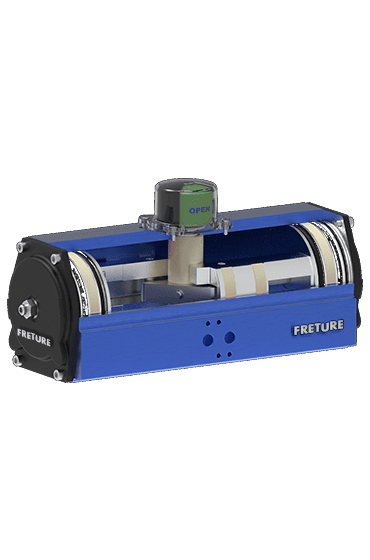
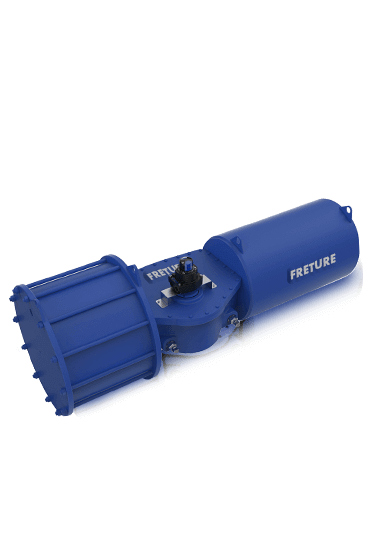
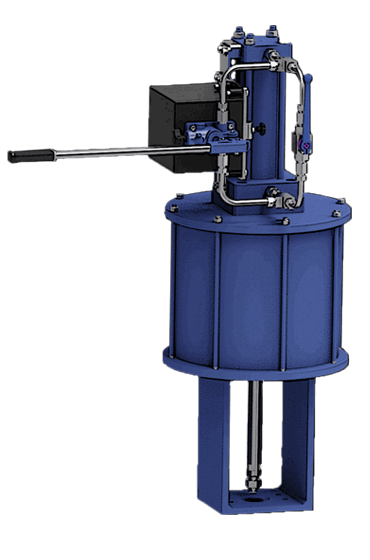
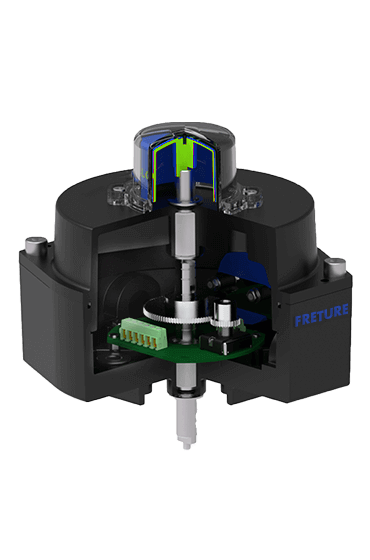
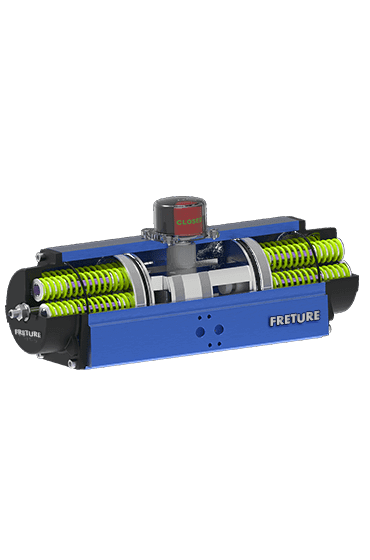
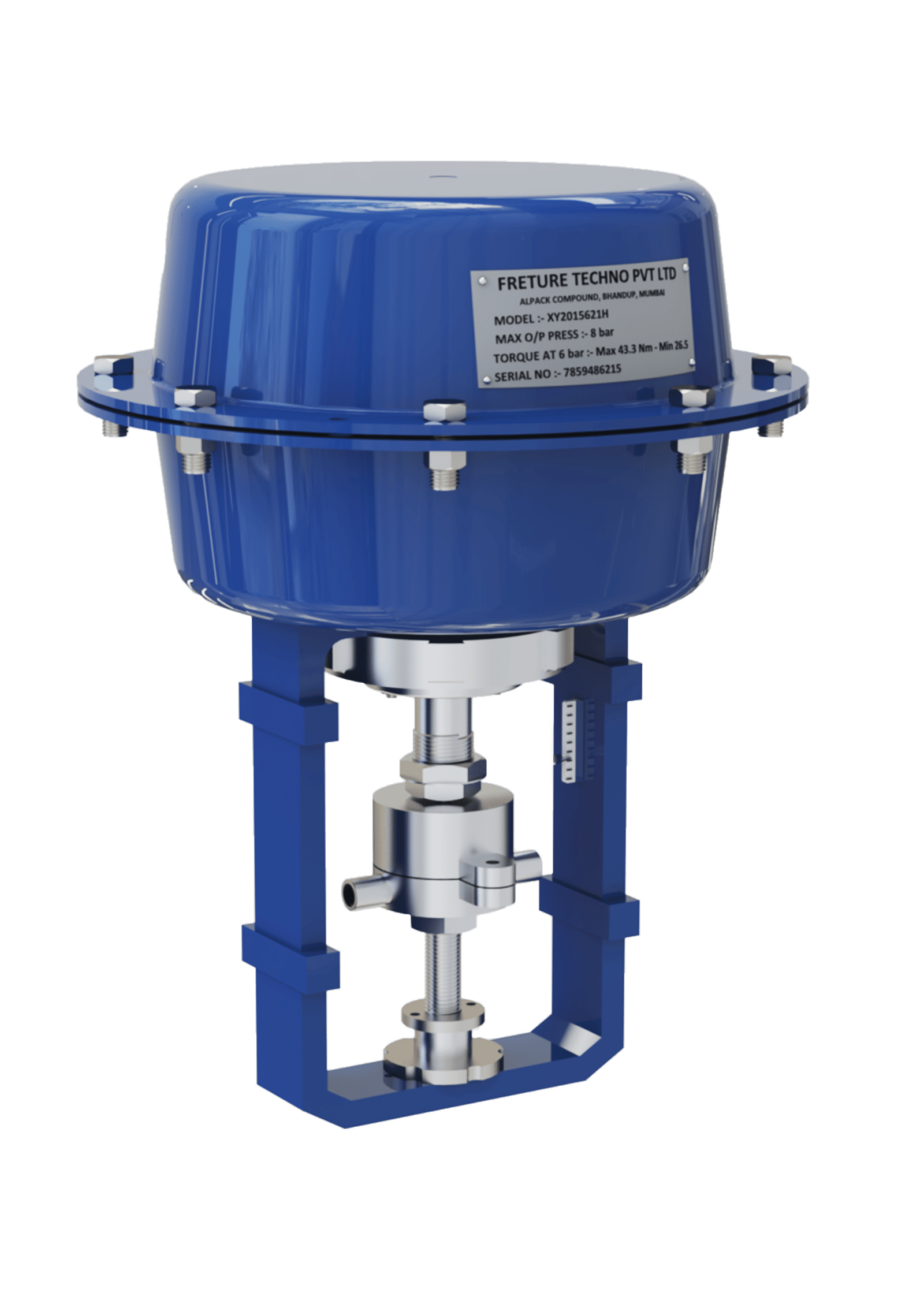
Diaphragm actuators convert pneumatic pressure into linear motion. Compressed air acts on the diaphragm, creating force to move the actuator stem and position the valve.
Pneumatic Linear Diaphragm Actuator
We are leading Pneumatic Linear Diaphragm Actuator Manufacturers in Mumbai, India, We understand problems caused due to inadequate actuation and tackle these challenges with precision. Its PTFE/ EPDM diaphragm design eliminates leakage. while the spring-return mechanism ensures fail-safe operation during power outages. By delivering consistent valve positioning, it resolves issues like flow inaccuracies, overpressurization, and actuator fatigue, enhancing process efficiency and safety.
What is a Diaphragm Actuator?
A Diaphragm Actuator is a type of pneumatic linear actuator that uses compressed air to move a flexible diaphragm, generating force to operate a valve stem. These actuators are commonly installed on control valves to regulate flow, pressure, and temperature in industrial processes.
When air pressure enters the actuator chamber, it pushes the diaphragm and actuator stem, causing the valve to open or close. A spring mechanism provides the return force, allowing the actuator to return to its original position when air pressure decreases.
Compared with piston actuators, diaphragm actuators offer:
- Smooth linear movement
- High positioning accuracy
- Low friction operation
- Safe fail-safe functionality
Because of their simple design and reliability, diaphragm actuators are widely used in process automation and instrumentation systems.
How a Pneumatic Linear Diaphragm Actuator Works
The working principle of a Pneumatic Linear Diaphragm Actuator is based on converting pneumatic energy into linear mechanical force.
Working Process
- Compressed Air Supply
Instrument air enters the actuator chamber through the control system.
- Diaphragm Movement
Air pressure acts on the flexible diaphragm, causing it to deflect.
A spring inside the actuator provides counter force and ensures fail-safe positioning if air pressure is lost.
- Stem Motion
- Spring Return Mechanism
- Valve Position Control
The actuator positions the valve precisely according to the air pressure signal received from the control system.
This mechanism ensures smooth valve operation, high reliability, and accurate flow control in industrial process systems.
Advantages of Using Diaphragm Actuators
Industrial process systems require actuators that deliver reliable, safe, and precise performance. Diaphragm actuators offer several advantages:
- Precise Flow Control: Provides accurate valve positioning for regulating flow, pressure, and temperature.
- Fail-Safe Operation: Spring return design protects the system during power or air failure.
- Reduced Maintenance: Minimal moving parts reduce wear and maintenance costs.
- Chemical Resistance: Suitable for corrosive environments due to PTFE and EPDM diaphragm materials.
- Improved Process Efficiency: Stable actuator performance prevents flow inaccuracies and pressure surges.
The actuator works by converting pneumatic pressure into linear motion, enabling precise valve control. Compressed air acts on the diaphragm, moving the actuator stem to position the valve. This mechanism ensures smoothness, deals with pressure inconsistencies or harsh conditions, reducing downtime and safety risks. Built with corrosion-resistant materials to handle high thrust demands in extreme conditions. Whether addressing stem binding, erratic valve response, or system instability, the Diaphragm Actuator is best suited to solve major problems and increase cost efficiency in industries like Chemical, Oil & gas, Pharmaceutical and Biochemical.
Download Brochure
Description | Features |
|---|---|
Actuator Type : Diaphragm Actuation Methods: Manual, Pneumatic, Electric Construction Material:Stainless Steel, Carbon Steel, Alloy Options Diaphragm Material: EPDM, PTFE, FKM Stroke Length: 10–100 mm Temperature Range:: -20°C to +80°C (extended options available) Operating Pressure: 2 – 15 bar Mounting Options: Flanged, Foot, Inline Response Time: <1 second Control Options : On/Off, Modulating, Manual Override Cycle Life: High cycle life (up to 1,000,000 cycles) Standards/Certifications: NAMUR, ATEX, ICEX, ISO 5211 | Provides leak-free, bubble-tight sealing for reliable isolation. Versatile operation options for automation or manual control. Offers excellent chemical and temperature resistance. Available in multiple sizes to meet diverse flow requirements. Suitable for a wide range of operating temperatures. Robust performance under standard process pressures. Minimizes leakage and reduces maintenance costs. Fast actuation for rapid system response. Provides flexible control for varied process requirements. Designed for long-term, high-frequency operation. Complies with international quality and safety standards. |
FAQ’s
Have a question before you buy our products? Take a look at the FAQs below.
If you don’t find the answer you’re looking for, get in touch with us here.
- What is the operating principle of a Pneumatic Linear Diaphragm Actuator?
- What pressure range can these Actuators handle?
They typically operate within a range of 3 to 15 psi (0.2 to 1 bar), but high-pressure models can handle up to 150 psi (10 bar) or more, depending on the design.
- With what valves can these Actuators be used?
Diaphragm actuators are compatible with globe valves, ball valves, butterfly valves, plug valves, and control valves. They excel in applications requiring precise flow control, tight shut-off, and high thrust, making them ideal for demanding environments.
- Are these Actuators suitable for hazardous environments?
Yes, they are often designed with explosion-proof and corrosion-resistant materials, making them ideal for hazardous areas like oil refineries and chemical plants.
- How do diaphragm actuators ensure fail-safe operation?
They use a spring-return mechanism that automatically moves the valve to a safe position (open or closed) during power or air supply failure.
- What materials are used in these Actutator construction?
Common materials include nitrile rubber, EPDM, PTFE, and Viton, chosen for their resistance to temperature, corrosion, and chemical compatibility
- Can these Actuators be integrated with digital control systems?
Yes, this Automation ready actuator can be paired with positioners, Local Control Station and limit switch for precise automation and integration into the system.
Industries where Pneumatic Linear Diaphragm Actuator is Used
Oil and Gas Industry
Chemical Processing Industry
Water Treatment Industry
Power Generation Industry
Pharmaceutical Industry
Applications of Pneumatic Linear Diaphragm Actuator
Distribution System Automation: Manages valves in municipal water networks, supporting dynamic control of water distribution and pressure regulation.
Cleaning and Sanitizing Cycles: Actuates valves in CIP systems used to clean processing equipment, reducing manual intervention and contamination risk.
Wellhead Valve Operation: Used for actuation in critical valves at the wellhead, enabling safe startup, shutdown, and flow regulation during production.
Cryogenic and LNG Applications: Operates in extreme temperature conditions in LNG processing, ensuring dependable performance in cryogenic environments.
Fluid Mixing and Transfer: Ensures precise operation of valves in systems used for mixing and transferring sensitive pharmaceutical fluids, minimizing risk of contamination.
Get in Touch
You will find yourself working in a true partnership that results in an incredible experience, and an end product that is the best.