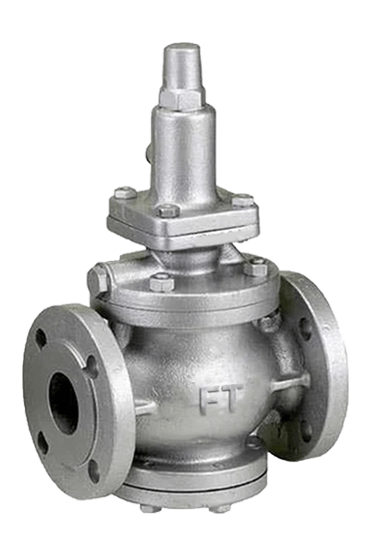
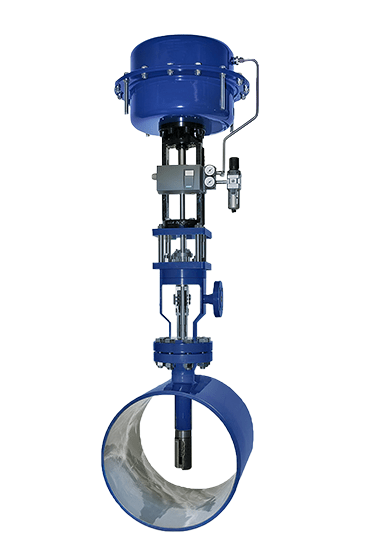
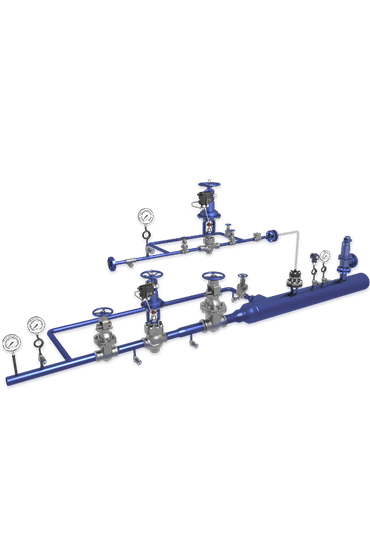
Pressure Reducing Station

We are leading Pressure Reducing Station Manufacturers in India. The Pressure Reducing Station (PRS) is specifically designed to eliminate hazards associated with unregulated high-pressure steam systems—such as pipe rupture, valve seat erosion, water hammer, and system overload. These failures can lead to costly downtime, safety risks, and damage to downstream equipment.

To address these challenges, the PRS delivers precise and stable pressure regulation while maintaining thermal equilibrium throughout the downstream process. Its design centers around a pilot-operated Pressure Reducing Valve (PRV), engineered for high responsiveness and accuracy. Integrated multi-stage noise attenuation and anti-cavitation trim ensure smooth pressure drop across stages, significantly reducing turbulence, vibration, and noise—key factors that lead to equipment wear and failure.

What is a Pressure Reducing Station?

A Pressure Reducing Station (PRS) is a piping system arrangement used to lower high inlet pressure of steam, gas, or other process fluids to a controlled and usable downstream pressure. In many industrial facilities, fluids are generated or transported at high pressure for efficient transmission, but the equipment using the fluid requires a lower and stable pressure. A PRS performs this pressure regulation automatically, ensuring that downstream systems operate safely and efficiently.

Pressure reducing stations are commonly installed in steam distribution networks, process plants, and utility pipelines where pressure control is critical to prevent equipment damage, leakage, or unsafe operating conditions.

How a Pressure Reducing Station Works

The operation of a pressure reducing station is based on controlled throttling of fluid pressure through a pressure regulating valve. High-pressure fluid enters the station and first passes through a strainer or filtration unit to remove dirt, scale, or other contaminants that could affect valve performance.

The filtered fluid then flows through a pressure reducing valve, which adjusts its opening based on the downstream pressure requirement. This valve continuously modulates to maintain the desired outlet pressure even when inlet pressure or flow demand changes.

Instrumentation such as pressure gauges or transmitters monitor both upstream and downstream pressure levels. If the outlet pressure exceeds the set limit, safety devices such as relief valves or safety valves activate to protect the system from over-pressure conditions.

This advanced configuration is capable of throttling pressures from 150 bar to as low as 5 bar with ±1% accuracy, ensuring consistent output even under fluctuating upstream conditions. The result is a highly reliable, maintenance-friendly system that enhances process stability, protects critical assets, and improves operational safety across steam-intensive applications.

Key Components of a Pressure Reducing Station

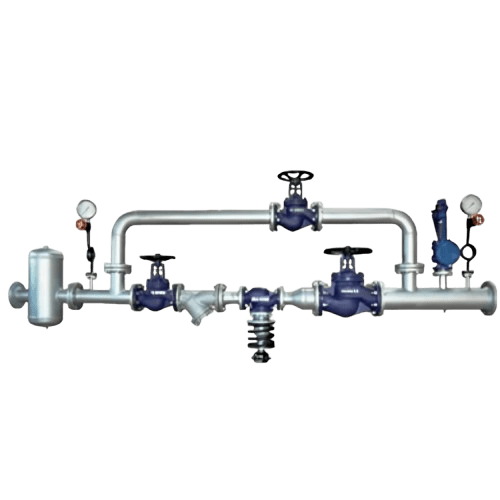
A typical pressure reducing station consists of several interconnected components designed to ensure reliable pressure control.

The pressure reducing valve (PRV) is the primary component responsible for regulating pressure. Isolation valves are installed before and after the PRV to allow maintenance without shutting down the entire system. A strainer is placed upstream to remove impurities and protect the internal valve components from damage.

A bypass line with a manual valve is often provided so that the system can continue operating if the main PRV requires servicing. Safety valves or relief valves are also included to prevent excess pressure buildup in the downstream pipeline.

Additionally, pressure gauges, temperature indicators, and other monitoring instruments help operators observe system performance and maintain safe operation.

Design Features of a Pressure Reducing Station

The Pressure Reducing station employs dual-seat pilot valves and dome-loaded actuators to maintain setpoints despite upstream fluctuations, while machined labyrinth discs dissipate kinetic energy to prevent cavitation damage. Its compact, modular design simplifies retrofitting into legacy infrastructure, making it a cornerstone of modern, resilient steam distribution networks.

Read More
Enquire Now

Specifications

Features

Type: Direct-acting, Pilot-operated, or Dome-loaded

Inlet Pressure Range: 50–600 psi (3.4–41 bar)

Outlet Pressure Range: Adjustable 15–300 psi (1–20.7 bar)

Max Operating Pressure: 720 psi (50 bar)

Temperature Range: Fluid (-20°C to 180°C), Ambient (-40°C to 80°C)

Flow Capacity (Cv): 2.5–25

Connection Type & Size: NPT, Flanged, Socket Weld (½"–4")

Body Material: Brass, Stainless Steel, Cast Iron

Seat & Seal Material: EPDM, NBR, Viton®, PTFE

Accuracy: ±5% of set pressure

Leakage Class: ANSI/FCI 70-2 Class IV or VI

Adjustment Mechanism: Knob, Screwdriver, Pilot

Standards Compliance: ASME, ISO, EN, PED

Certifications: NSF/ANSI 61, WRAS, PED

  1. Choice of control mechanism (direct-acting for simplicity, pilot-operated for high accuracy).
  2. Adaptable to varying input pressures (e.g., municipal supply to industrial systems). Precision pressure reduction for downstream equipment protection.
  3. Built-in safety margin to handle pressure surges. Resilient in extreme environments (freezing to high-heat systems).
  4. Optimized flow rates for system efficiency (Cv scales with valve size). Flexible installation options for pipelines.
  5. Corrosion-resistant construction for longevity in water/chemical applications. Leak-tight seals with chemical/thermal compatibility.
  6. Stable downstream pressure control under fluctuating loads. Compliant with industry standards (Class VI ensures zero leakage).
  7. User-friendly tuning for precise pressure settings. Globally certified for safety and interoperability. Approved for potable water, industrial fluids, and EU markets.

Related Products

Pressure Reducing Valve manufacturers in India

Type: Direct-acting, Pilot-operated, Dome-loaded
Standards Compliance: ASME, ISO, EN, PED
Body Material: Stainless Steel, Cast Iron, Carbon Steel, Alloy.
Max Operating Pressure: 720 psi (50 bar)
Temperature Range: 20°C to 180°C
Seat & Seal Material: EPDM, Viton, PTFE

Type : Steam Desuperheater Valve

Design Standard: ASME B16.34, API 609, ISO 15848-1 (fugitive emissions)

Body Material: Stainless Steel,Inconel, uplex

Trim Material: Stellite 6, Tungsten Carbide, Ceramic-coated

Operating Pressure: 0.5–200 bar

Temperature Range: -29°C to 600°C

Type: Integrated station with PRV, desuperheater, & control system
Steam Temperature Range: Up to 600°C (1112°F)
Body Material: Stainless Steel 316/Alloy 20
Control System: PLC/PID-based automation with temperature/pressure sensors
Safety Features: Thermal relief valve, fail-safe closure
Connection Types: Flanged (DN50–DN300), Welded

FAQ’s

Have a question before you buy our products? Take a look at the FAQs below.
If you don’t find the answer you’re looking for, get in touch with us here.

  • What is a pressure reducing control station?

    A pressure reducing control station integrates a pressure reducing valve (PRV), instrumentation, and safety components to precisely regulate downstream pressure while ensuring system stability. It often includes features like bypass valves, safety relief valves, and gauges for comprehensive control.


  • What pressure and temperature ranges can these stations handle?

    Industrial Steam Pressure Reducing stations manage pressures up to 420 bar and temperatures exceeding 500°C, compliant with ASME B16.34.


  • How do they prevent overpressure scenarios?

    Stations include safety relief valves or rupture discs set at 10–15% above the PRV’s setpoint, ensuring automatic bleed-off during failures.

  • Can they handle rapid pressure fluctuations?

    Advanced pressure reducing stations use pilot-operated PRVs with damper valves or multi-stage trims to smooth spikes and respond to load changes in <2 seconds.

  • How is noise and vibration minimized?

    Multi-stage pressure reduction, anti-cavitation trims, and diffuser plates mitigate noise (below 85 dB(A)) in high PRS systems.


  • How do they improve energy efficiency?

    By maintaining optimal pressure profiles, pressure reducing stations reduce pump/compressor loads, cutting energy waste by 15–20% and extending equipment lifespan.

Industries where Pressure Reducing Station is used

Chemical Industry
Pharmaceutical Industry
Power Generation
Food and Beverage Industry
Oil and Gas Industry
Applications
  • Refinery Processes: Maintains optimal pressure between processing units (e.g., distillation columns, reactors) to ensure efficiency and safety.
  • Carbonation Control: Adjusts CO₂ pressure for consistent beverage carbonation to avoid container over-pressurization.
  • Storage Safety: Reduces pressure of volatile chemicals during storage or transfer via Pressure Reducing Valve (PRV) systems to minimize explosion risks.
  • Steam Turbine Inlets: Adjusts steam pressure from boilers to match turbine specifications, ensuring efficient energy conversion.
  • Hydronic Heating: Manages water pressure in heating loops using station technology to protect pipes and radiators.
Get in Touch
You will find yourself working in a true partnership that results in an incredible experience, and an end product that is the best.
This website is using cookies to provide a good browsing experience
Your cookie preferences have been saved.